

Rain Cyber
SUPERADMIN
Sep 10, 2026
In today’s connected world, customers are spending more time online than ever before. Whether they are searching for products, comparing services, reading reviews, or discovering new brands on social media, digital channels have become an essential part of the customer journey.
Digital marketing helps businesses reach these customers through online platforms, build meaningful relationships, generate leads, and turn online attention into measurable business growth.
For businesses of all sizes, having a strong digital marketing strategy is no longer optional—it is a key part of staying competitive.
What Is Digital Marketing?
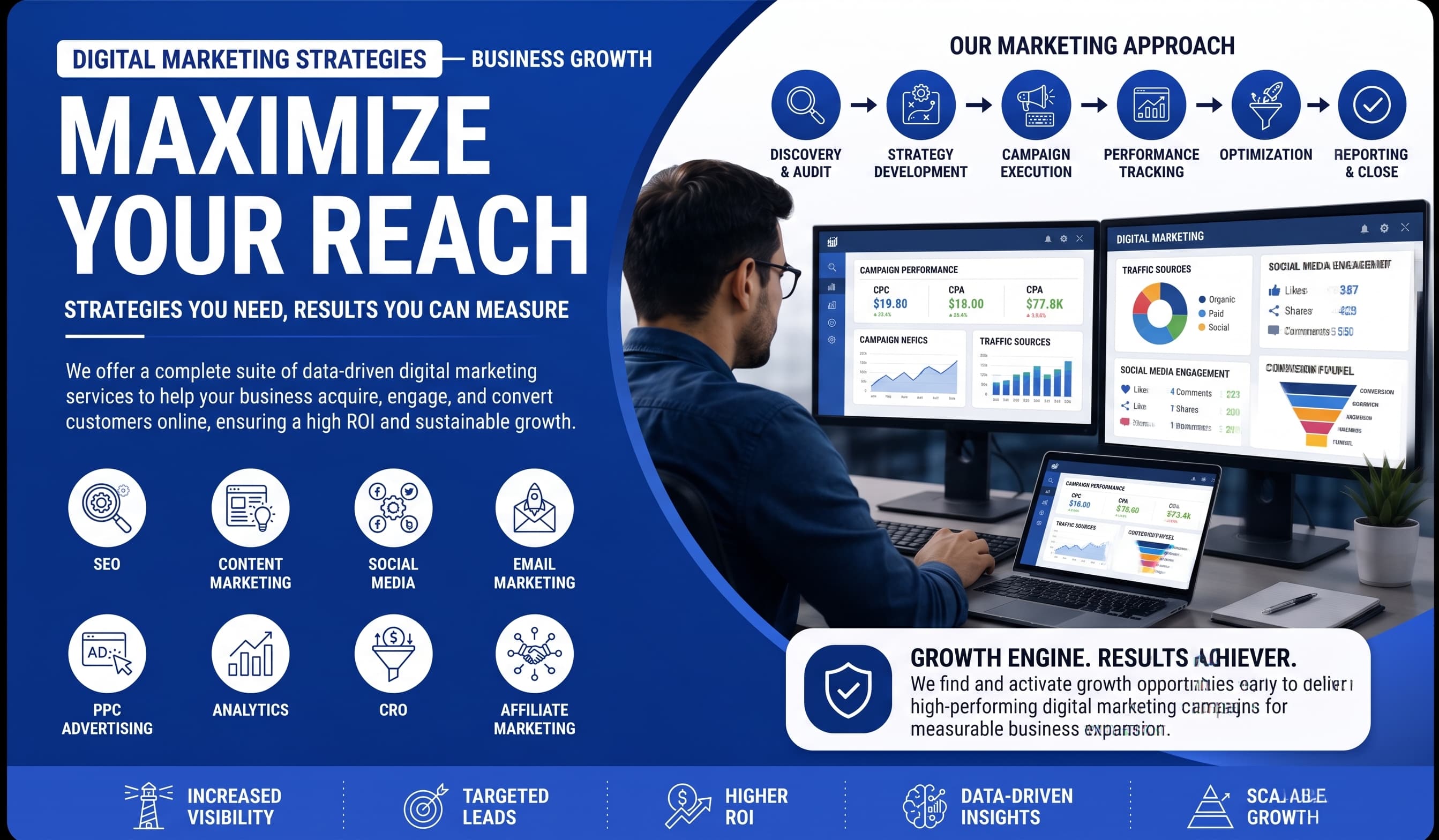
Digital marketing is the promotion of products, services, or brands through digital channels such as search engines, social media, websites, email, online advertising, and other internet-based platforms.
Unlike traditional marketing, digital marketing allows businesses to target specific audiences, measure campaign performance, and adjust strategies based on real-time data.
A successful digital marketing strategy can help a business:
Increase brand awareness
Reach new customers
Generate quality leads
Increase website traffic
Improve customer engagement
Build brand credibility
Increase sales and revenue
Key Components of Digital Marketing
1. Search Engine Optimization (SEO)
SEO helps your website appear higher in search engine results when potential customers search for relevant products or services.
Effective SEO can include:
Keyword research
On-page optimization
Technical SEO
Quality content creation
Website performance optimization
Link-building strategies
A strong SEO strategy can bring consistent organic traffic to your website without relying entirely on paid advertising.
2. Social Media Marketing
Social media platforms provide businesses with powerful opportunities to connect directly with their audience.
Through platforms such as Facebook, Instagram, LinkedIn, and YouTube, businesses can:
Promote products and services
Share valuable content
Build communities
Engage with customers
Increase brand visibility
Drive traffic to their websites
The key is to create content that provides value rather than simply promoting products.
3. Content Marketing
Content marketing focuses on creating and distributing useful, relevant, and engaging content for your target audience.
Examples include:
Blog posts
Videos
Infographics
Social media posts
Case studies
Guides and tutorials
E-books
Good content helps establish your business as a trusted source of information while supporting SEO, social media, and lead-generation efforts.
4. Paid Digital Advertising
Paid advertising allows businesses to reach specific audiences quickly.
Campaigns can be created around factors such as:
Location
Age
Interests
Online behavior
Search intent
Previous website interactions
Platforms such as Google Ads and social media advertising networks can help businesses generate targeted traffic, leads, and sales.
5. Email Marketing
Email marketing remains an effective way to communicate with existing and potential customers.
Businesses can use email campaigns to share:
Promotions and offers
Product updates
Newsletters
Educational content
Personalized recommendations
Important announcements
Building a quality email list can create a valuable long-term communication channel with your customers.
6. Analytics and Performance Tracking
One of the biggest advantages of digital marketing is measurability.
Businesses can track metrics such as:
Website visitors
Conversion rates
Engagement
Click-through rates
Leads generated
Advertising costs
Customer acquisition costs
Return on investment (ROI)
These insights help businesses understand what is working and where improvements are needed.
Why Digital Marketing Matters for Business Growth?
A strong online presence can make it easier for customers to discover and trust your business.
For example, imagine a potential customer searching online for a service your company provides. If your website appears in search results, your social media profiles are active, and your content answers their questions, you have multiple opportunities to build trust before they even contact you.
Digital marketing also makes it possible for smaller businesses to compete with larger companies by targeting specific audiences and focusing their resources on channels that deliver results.
How to Build an Effective Digital Marketing Strategy?
A successful strategy starts with understanding your business and your customers.
Step 1: Define Your Goals
Determine what you want to achieve. Your goal could be increasing website traffic, generating leads, improving brand awareness, or increasing online sales.
Step 2: Understand Your Audience
Identify who your ideal customers are, what problems they have, what they are searching for, and which digital platforms they use.
Step 3: Choose the Right Channels
You don't necessarily need to be everywhere. Focus on the channels where your target audience is most active and where your business can deliver the most value.
Step 4: Create Valuable Content
Develop content that answers questions, solves problems, educates customers, and demonstrates your expertise.
Step 5: Measure and Improve
Regularly review your marketing data. Identify successful campaigns, improve underperforming activities, and continuously test new ideas.
Common Digital Marketing Mistakes to Avoid
Many businesses struggle with digital marketing because they focus only on posting content or running advertisements without having a clear strategy.
Avoid these common mistakes:
Marketing without defined goals
Trying to target everyone
Ignoring SEO
Posting inconsistent content
Focusing only on sales
Not tracking campaign performance
Ignoring mobile users
Expecting immediate results
Digital marketing is a long-term process. Consistency, testing, analysis, and continuous improvement are essential.
The Future of Digital Marketing
Digital marketing continues to evolve as technology and customer behavior change. Businesses are increasingly using automation, artificial intelligence, personalization, advanced analytics, and data-driven strategies to deliver better customer experiences.
The businesses that succeed will be those that stay adaptable, understand their audiences, and consistently provide value across digital channels.
Grow Your Business with RainCyber
At RainCyber, we understand that every business has different goals and challenges. Our digital marketing approach focuses on combining creativity, technology, and data to help businesses strengthen their online presence.
From social media marketing and SEO to paid advertising, content marketing, audience research, and performance analytics, we can help businesses build a stronger digital strategy and connect with the right customers.
Your customers are online. Your business should be there too.
Final Thoughts
Digital marketing is more than advertising your business online. It is about reaching the right people, delivering the right message, building trust, and creating measurable business results.
With a well-planned strategy and consistent execution, digital marketing can become one of the most powerful tools for growing your brand in today’s competitive marketplace.
RainCyber — Powering Your Digital Future.