

Rain Cyber
SUPERADMIN
Jul 27, 2026
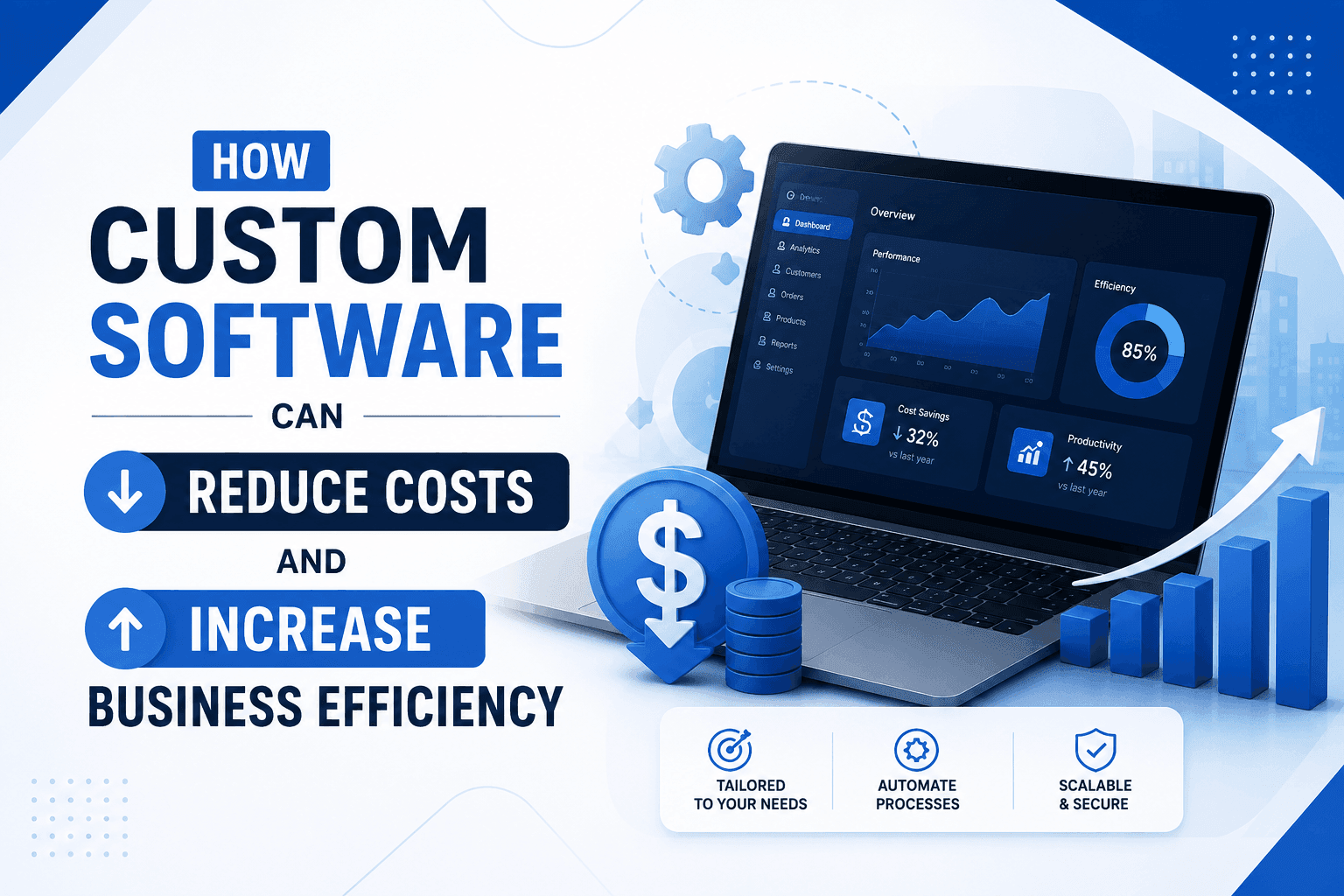
In today's competitive business environment, organizations are constantly searching for ways to reduce operational costs while improving productivity. Many companies rely on off-the-shelf software because it is readily available and often less expensive upfront. However, as businesses grow, these generic solutions frequently become a limitation rather than an advantage.
Custom software development offers a smarter long-term investment by creating solutions tailored specifically to your business processes, workflows, and goals. Instead of forcing your team to adapt to software, custom software adapts to your business.
In this article, we'll explore how custom software helps reduce costs, improve operational efficiency, and provide a significant competitive advantage.
What Is Custom Software?
Custom software is an application designed and developed specifically for a particular business or organization. Unlike commercial software that serves a broad audience, custom solutions are built around your unique requirements.
Examples include:
Customer Relationship Management (CRM) systems
Enterprise Resource Planning (ERP) software
Inventory Management Systems
HR & Payroll Solutions
Booking and Reservation Platforms
Manufacturing Management Systems
Customer Portals
Mobile Applications
Business Automation Tools
Because every feature is designed with your business in mind, custom software eliminates unnecessary complexity while maximizing productivity.
1. Eliminates Repetitive Manual Work
One of the biggest hidden costs in any business is manual work.
Employees often spend hours:
Entering the same data multiple times
Updating spreadsheets
Sending repetitive emails
Generating reports manually
Managing paperwork
Custom software automates these repetitive tasks, allowing employees to focus on higher-value activities.
Benefits
Faster workflows
Fewer human errors
Increased productivity
Lower labor costs
For example, an automated invoice generation system can reduce hours of manual accounting work to just a few clicks.
2. Reduces Human Errors
Mistakes in data entry, inventory tracking, billing, or customer information can become expensive.
Human errors often result in:
Financial losses
Incorrect reports
Customer dissatisfaction
Compliance issues
Lost productivity
Custom software validates data automatically, reducing errors before they happen.
Features like:
Required fields
Automatic calculations
Duplicate detection
Smart validation
Approval workflows
help businesses maintain accurate information at all times.
3. Improves Employee Productivity
Employees become more productive when they have the right tools.
Instead of switching between multiple software applications, custom software combines everything into one centralized platform.
Employees can:
Access customer information instantly
Generate reports within seconds
Track projects more efficiently
Collaborate in real time
Complete tasks faster
The result is a more productive workforce and better overall performance.
4. Eliminates Unnecessary Software Licenses
Many businesses pay monthly subscriptions for multiple software solutions.
For example:
CRM Software
Inventory Software
Accounting Software
HR Software
Project Management Tools
Reporting Tools
These recurring subscription fees add up quickly.
A custom business management system can combine several tools into a single platform, significantly reducing software licensing costs over time.
5. Streamlines Business Processes
Every company has unique workflows.
Off-the-shelf software often forces businesses to change how they work.
Custom software does the opposite.
It is built around your existing processes, making operations smoother and more efficient.
Examples include:
Purchase approval automation
Order processing
Inventory updates
Customer support workflows
Sales management
Production tracking
When workflows are optimized, employees spend less time navigating complicated systems and more time getting work done.
6. Integrates All Business Systems
Businesses often use multiple applications that don't communicate with one another.
This creates:
Duplicate work
Inconsistent data
Reporting challenges
Higher maintenance costs
Custom software can integrate with:
ERP systems
CRM platforms
Payment gateways
Accounting software
E-commerce platforms
Email marketing tools
Shipping providers
Third-party APIs
Integration creates a single source of truth, improving efficiency and decision-making.
7. Provides Better Business Insights
Making informed decisions requires accurate data.
Custom software can provide:
Real-time dashboards
Financial reports
Sales analytics
Inventory insights
Employee performance reports
Customer behavior analysis
Instead of manually compiling spreadsheets, business leaders receive actionable insights instantly.
Better data leads to smarter business decisions.
8. Scales with Your Business
As your business grows, your software needs evolve.
Many off-the-shelf solutions require expensive upgrades or force businesses to switch platforms.
Custom software is designed with scalability in mind.
You can add new features whenever your business requires them, such as:
New departments
Additional users
Mobile applications
Customer portals
AI-powered automation
Advanced reporting
Multi-location management
This flexibility protects your investment for years to come.
9. Enhances Customer Experience
Customer satisfaction directly impacts business growth.
Custom software enables businesses to:
Respond to inquiries faster
Track customer history
Automate follow-ups
Provide self-service portals
Offer personalized experiences
A better customer experience increases retention, loyalty, and referrals.
Happy customers become repeat customers.
10. Delivers Long-Term Cost Savings
While custom software typically requires a higher initial investment than ready-made solutions, it often delivers a significantly lower total cost of ownership over time.
Long-term savings come from:
Reduced manual labor
Lower software subscription costs
Improved operational efficiency
Fewer costly errors
Less downtime
Better resource utilization
Increased productivity
Simplified maintenance
For growing businesses, these savings often outweigh the initial development cost.
Is Custom Software Right for Your Business?
Custom software is an excellent choice if your business:
Has repetitive manual processes
Uses multiple disconnected software tools
Requires unique workflows
Plans to scale in the future
Wants better reporting and analytics
Needs stronger security and control
Seeks long-term cost savings
If you answered "yes" to any of these points, investing in a tailored software solution could provide a significant return on investment.