

Rain Cyber
SUPERADMIN
Aug 27, 2026
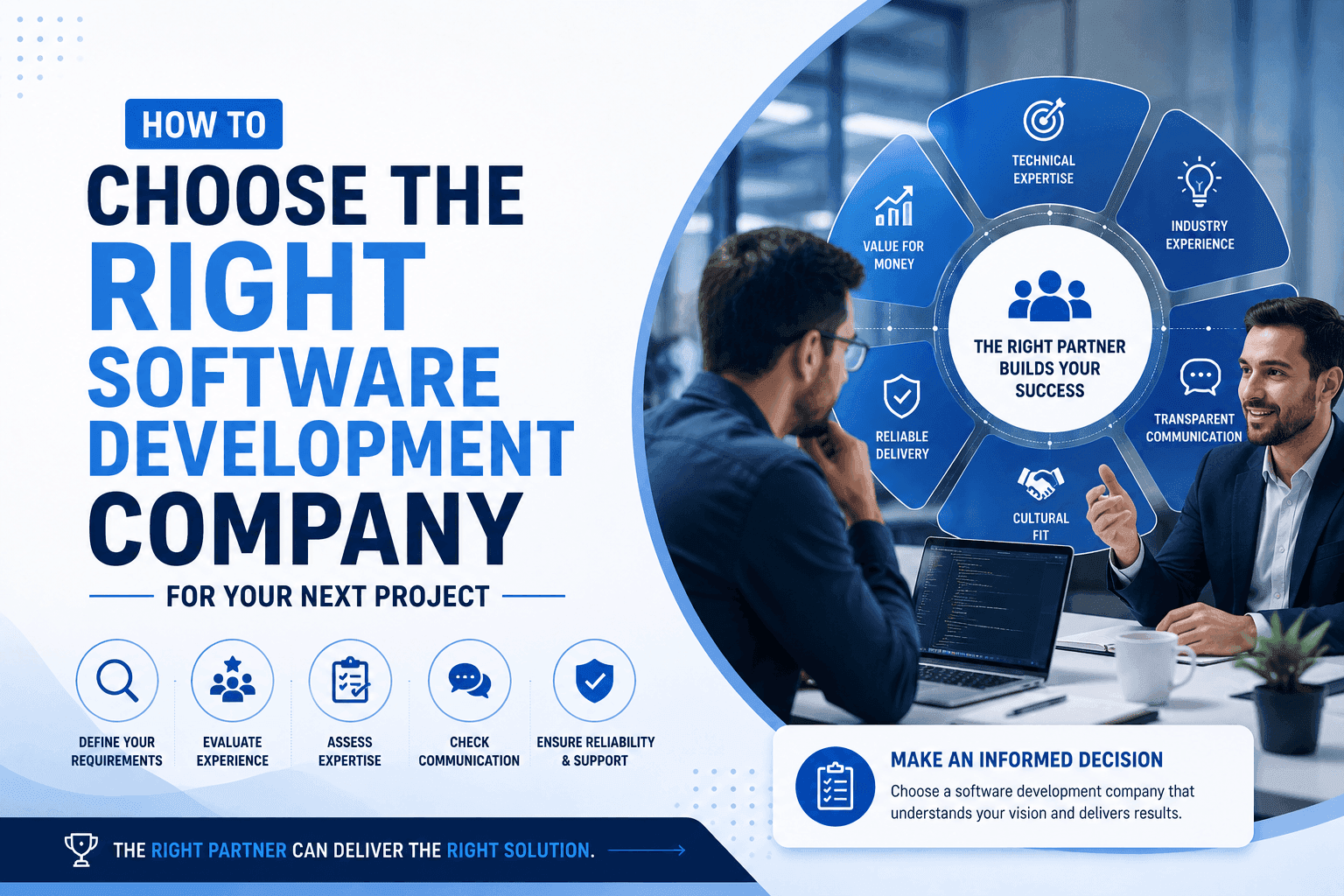
Building a successful software product starts with choosing the right development partner. Whether you're planning a custom business application, a mobile app, an eCommerce platform, or a large-scale enterprise solution, the software development company you select will have a significant impact on your project's success.
While there are thousands of software development companies worldwide, not all of them offer the same level of expertise, communication, or commitment. Choosing the wrong partner can lead to missed deadlines, budget overruns, poor-quality software, and costly rework.
This guide will help you understand what to look for when selecting a software development company and how to ensure your project is delivered successfully.
Why Choosing the Right Development Partner Matters
Software development is more than writing code. It involves understanding your business goals, designing intuitive user experiences, selecting the right technologies, maintaining security, and providing long-term support.
A reliable software development company becomes a strategic partner that helps you:
Turn ideas into functional software
Improve business efficiency
Reduce development risks
Deliver projects on time and within budget
Build scalable solutions for future growth
Maintain and improve the software after launch
Making the right choice early can save significant time, money, and frustration later.
Clearly Define Your Project Requirements First
Before contacting software development companies, spend time outlining your project.
Consider questions such as:
What problem are you trying to solve?
Who are your target users?
What features are essential?
What platforms do you need (Web, Mobile, Desktop)?
What is your expected budget?
What is your desired launch timeline?
Having clear requirements helps potential development partners provide accurate estimates and realistic timelines.
Look for Relevant Industry Experience
Experience matters.
A company that has successfully built projects similar to yours will better understand common challenges, user expectations, and industry best practices.
For example:
Healthcare software
Retail and eCommerce
Logistics platforms
Manufacturing systems
Education technology
Financial applications
Real estate solutions
SaaS platforms
Ask for examples of similar projects and how the company approached technical and business challenges.
Review Their Portfolio
A company's portfolio provides insight into the quality of its work.
When reviewing previous projects, pay attention to:
Design quality
User experience
Performance
Feature complexity
Industry diversity
Mobile responsiveness
Overall professionalism
A strong portfolio demonstrates both technical expertise and attention to detail.
Evaluate Their Technical Expertise
Technology changes rapidly, so your development partner should stay current with modern tools and frameworks.
Depending on your project, look for expertise in:
Front-End Development
React
Angular
Vue.js
Next.js
Back-End Development
Node.js
.NET
Java
PHP
Python
NestJS
Mobile Development
Flutter
React Native
Swift
Kotlin
Databases
PostgreSQL
MySQL
MongoDB
SQL Server
Cloud & DevOps
AWS
Microsoft Azure
Google Cloud
Docker
Kubernetes
CI/CD pipelines
The right technology stack should align with your project's requirements and future scalability.
Understand Their Development Process
A structured development process increases the likelihood of project success.
Ask how the company manages:
Requirements gathering
Planning
UI/UX design
Development
Testing
Deployment
Maintenance
Many successful companies use Agile methodologies that divide projects into manageable sprints with regular feedback and continuous improvements.
Assess Communication and Collaboration
Poor communication is one of the leading causes of project delays.
Choose a company that communicates clearly and consistently.
Look for:
Regular progress updates
Dedicated project managers
Transparent timelines
Clear documentation
Fast response times
Open collaboration
Good communication helps identify issues early and keeps everyone aligned throughout the project.
Verify Their Quality Assurance Process
High-quality software requires thorough testing.
Ask about their testing procedures, including:
Functional testing
Performance testing
Security testing
Compatibility testing
Mobile responsiveness
Automated testing
User acceptance testing (UAT)
A strong quality assurance process helps identify bugs before your software reaches users.
Prioritize Security
Security should never be an afterthought.
Ensure the company follows secure development practices, including:
Data encryption
Secure authentication
Role-based access control
Regular security testing
Secure coding standards
Compliance with relevant regulations
Protecting your business data and customer information should be a core part of the development process.
Check Client Reviews and Testimonials
Past clients often provide valuable insights into how a company operates.
Look for feedback about:
Project management
Communication
Meeting deadlines
Technical expertise
Problem-solving
Post-launch support
Consistently positive reviews are usually a good indicator of reliability and professionalism.
Discuss Scalability
Your software should grow with your business.
Ask whether the proposed solution can support:
More users
Additional features
Multiple locations
Higher traffic
Third-party integrations
Mobile applications
Future expansion
Scalable architecture reduces the need for expensive redevelopment later.
Understand Pricing Models
Different companies use different pricing structures.
Common models include:
Fixed Price
Best for projects with well-defined requirements.
Advantages:
Predictable budget
Clearly defined scope
Time and Materials
Suitable for evolving projects where requirements may change.
Advantages:
Greater flexibility
Easier to accommodate new features
Dedicated Development Team
Ideal for long-term projects requiring ongoing development.
Advantages:
Full control over priorities
Long-term collaboration
Faster feature delivery
Choose the pricing model that best matches your project's complexity and flexibility requirements.
Ask About Post-Launch Support
Software development doesn't end after deployment.
Reliable companies provide:
Bug fixes
Performance monitoring
Security updates
Feature enhancements
Technical support
System maintenance
Backup and recovery planning
Ongoing support ensures your software remains secure, stable, and up to date.
Red Flags to Watch For
Be cautious if a software development company:
Promises unrealistic delivery times
Offers extremely low prices without explanation
Lacks a portfolio or client references
Provides vague proposals
Has poor communication
Doesn't discuss testing or security
Refuses to explain its development process
Doesn't offer post-launch support
These warning signs can lead to delays, hidden costs, and unsatisfactory results.
Questions to Ask Before Hiring
Before signing a contract, consider asking:
Have you built similar projects before?
What technologies do you recommend, and why?
Who will manage my project?
How often will I receive progress updates?
What is included in your testing process?
How do you handle change requests?
What happens if the project timeline changes?
Do you provide maintenance after launch?
Who owns the source code and intellectual property?
What security practices do you follow?
The answers will help you evaluate the company's expertise, transparency, and reliability.
Why Custom Software Is Often the Better Choice
Many businesses begin with off-the-shelf software but eventually outgrow its limitations.
Custom software offers several advantages:
Tailored to your business processes
Greater flexibility
Better integration with existing systems
Enhanced security
Improved scalability
Competitive differentiation
Long-term cost efficiency
When developed by the right partner, custom software becomes a valuable business asset that supports growth and innovation.