

Rain Cyber
SUPERADMIN
Jul 27, 2026
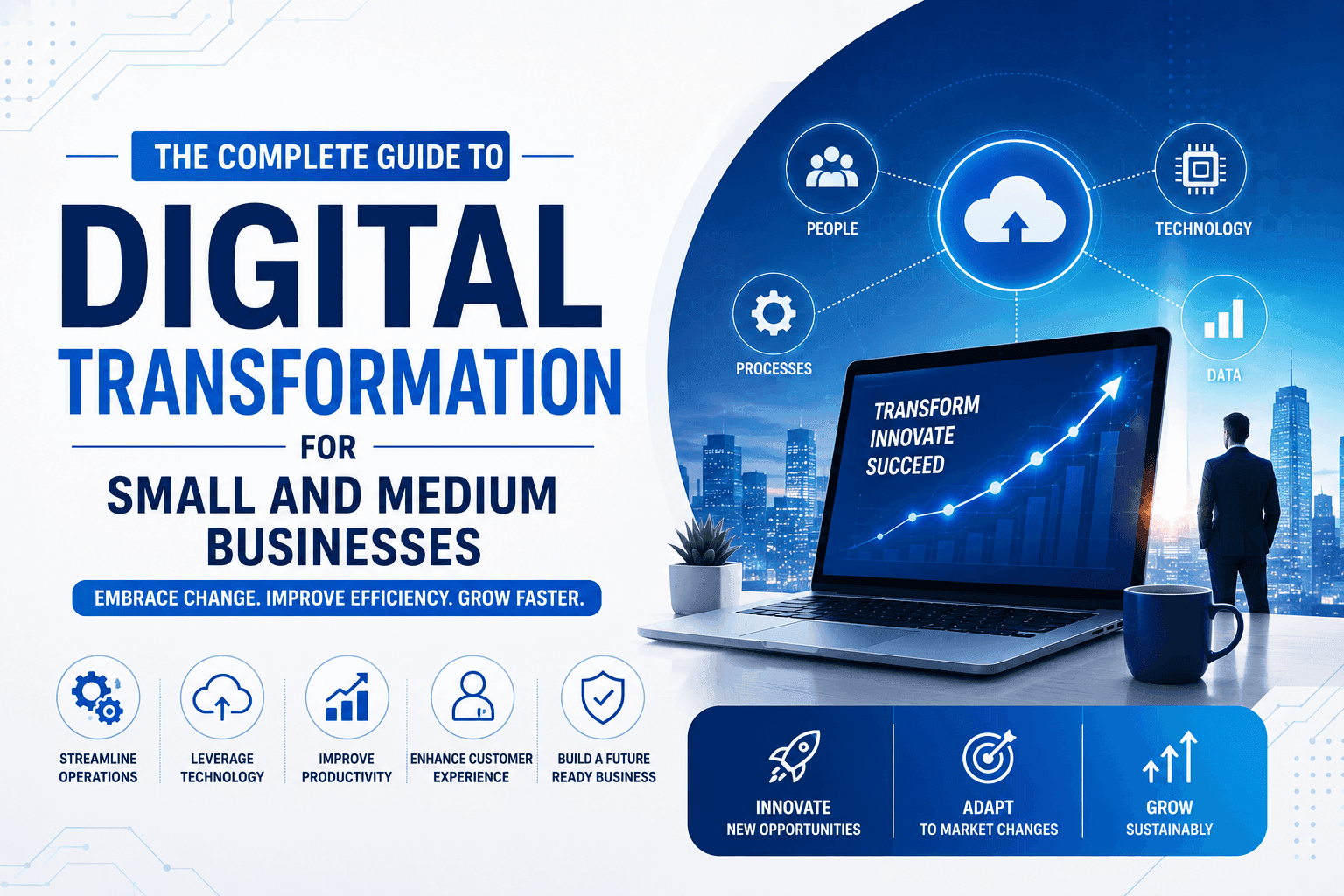
In today's fast-paced digital economy, small and medium-sized businesses (SMBs) face increasing pressure to innovate, improve efficiency, and meet rising customer expectations. Digital transformation is no longer a strategy reserved for large enterprises—it's a necessity for businesses that want to stay competitive and achieve sustainable growth.
Whether you're running a retail store, manufacturing company, healthcare clinic, logistics business, or professional service firm, embracing digital technologies can help streamline operations, reduce costs, and unlock new opportunities.
This guide explains what digital transformation is, why it matters for SMBs, and how to successfully implement it in your organization.
What Is Digital Transformation?
Digital transformation is the process of integrating digital technologies into every aspect of a business to improve operations, customer experiences, and decision-making.
It's more than simply purchasing new software or moving files to the cloud. True digital transformation involves rethinking how your business operates and using technology to create more efficient, data-driven, and customer-focused processes.
Examples include:
Automating repetitive tasks
Digitizing paper-based workflows
Implementing cloud-based software
Using real-time business analytics
Developing customer self-service portals
Integrating multiple business systems
Enabling remote collaboration
Leveraging AI and automation
The goal is to make your business faster, smarter, and more adaptable.
Why Digital Transformation Matters for SMBs
Many small businesses believe digital transformation is too expensive or complicated. In reality, delaying modernization often costs more than investing in it.
Key benefits include:
Improved operational efficiency
Lower operating costs
Faster customer service
Better decision-making through data
Increased employee productivity
Enhanced customer experiences
Stronger security and compliance
Greater scalability for future growth
Businesses that embrace digital transformation are better equipped to respond to market changes and customer demands.
Common Challenges SMBs Face
Before starting their digital transformation journey, many businesses struggle with:
Manual data entry
Paper-based documentation
Disconnected software systems
Limited visibility into business performance
Communication gaps between departments
Slow approval processes
Inventory inaccuracies
Inefficient customer support
Recognizing these pain points is the first step toward building a more efficient business.
Signs Your Business Needs Digital Transformation
Your business may benefit from digital transformation if:
Employees spend hours on repetitive administrative tasks.
Customer information is stored across multiple spreadsheets.
Different departments use disconnected software.
Reports take days to prepare.
You struggle to track inventory or sales in real time.
Customers experience delays in communication or service.
Your business lacks accurate data for decision-making.
If any of these challenges sound familiar, it's time to explore digital solutions.
Core Technologies Driving Digital Transformation
1. Cloud Computing
Cloud platforms allow businesses to access software and data securely from anywhere.
Benefits include:
Lower infrastructure costs
Automatic software updates
Secure backups
Remote accessibility
Easy collaboration
Cloud-based solutions also make it easier to scale as your business grows.
2. Business Process Automation
Automation reduces repetitive manual work and improves consistency.
Common automation examples include:
Invoice generation
Payroll processing
Inventory updates
Email notifications
Customer follow-ups
Approval workflows
Appointment scheduling
Automation saves time while reducing human errors.
3. Customer Relationship Management (CRM)
A CRM system helps businesses manage customer interactions throughout the entire customer journey.
Features often include:
Contact management
Sales pipeline tracking
Lead management
Customer communication history
Marketing automation
Customer support tools
A CRM improves customer relationships while increasing sales opportunities.
4. Enterprise Resource Planning (ERP)
ERP software centralizes multiple business functions into a single platform.
Typical ERP modules include:
Finance and accounting
Inventory management
Procurement
Sales
Human resources
Manufacturing
Reporting
An ERP eliminates duplicate data entry and provides real-time visibility across departments.
5. Business Intelligence and Analytics
Data is one of the most valuable assets for any business.
Business intelligence tools help organizations:
Monitor KPIs
Analyze sales trends
Forecast demand
Track financial performance
Identify operational bottlenecks
Real-time dashboards allow managers to make informed decisions quickly.
6. Mobile Applications
Mobile apps improve accessibility for both employees and customers.
Examples include:
Field service apps
Delivery tracking
Employee attendance
Customer ordering
Appointment booking
Inventory scanning
Mobile solutions increase productivity while improving customer convenience.
7. Artificial Intelligence (AI)
AI is becoming increasingly accessible for SMBs.
Practical applications include:
Customer support chatbots
Predictive analytics
Document processing
Personalized recommendations
Fraud detection
Intelligent search
Workflow automation
AI helps businesses work smarter rather than harder.
A Step-by-Step Digital Transformation Roadmap
Step 1: Evaluate Your Current Processes
Start by identifying inefficient workflows.
Ask questions like:
Which tasks consume the most time?
Where do errors occur most often?
Which processes depend heavily on manual work?
What frustrates employees or customers?
This assessment helps prioritize improvement opportunities.
Step 2: Define Clear Business Goals
Avoid implementing technology simply because it's popular.
Instead, establish measurable objectives, such as:
Reduce operating costs by 20%
Cut order processing time in half
Increase customer satisfaction
Improve inventory accuracy
Automate routine administrative tasks
Clear goals keep your transformation focused.
Step 3: Prioritize High-Impact Projects
Begin with projects that deliver quick, measurable results.
Examples include:
CRM implementation
Inventory automation
Online customer portal
Digital invoicing
Employee management system
Early successes build confidence and encourage broader adoption.
Step 4: Choose the Right Technology Partner
Technology is only as effective as its implementation.
Look for a software development partner that offers:
Industry experience
Scalable solutions
Strong security practices
Ongoing support and maintenance
Transparent communication
Custom development capabilities
The right partner understands your business goals—not just your technical requirements.
Step 5: Train Your Team
Technology adoption depends on people.
Provide employees with:
Hands-on training
Clear documentation
Ongoing support
Opportunities to ask questions
Regular feedback sessions
Well-trained employees adapt more quickly and maximize the value of new systems.
Step 6: Monitor and Improve
Digital transformation is an ongoing journey.
Track metrics such as:
Productivity improvements
Cost savings
Customer satisfaction
Employee adoption rates
System performance
Return on investment (ROI)
Use these insights to refine processes and continue improving.
Common Mistakes to Avoid
Many digital transformation projects fail because businesses:
Focus on technology instead of business goals
Try to modernize everything at once
Ignore employee training
Choose software that doesn't fit their workflows
Overlook cybersecurity
Skip planning and change management
Fail to measure success
Avoiding these mistakes increases the likelihood of a successful transformation.
How Custom Software Supports Digital Transformation
While off-the-shelf software works for many businesses, it often includes unnecessary features or lacks the flexibility to support unique processes.
Custom software offers several advantages:
Built around your workflows
Integrates with existing systems
Scales with business growth
Enhances security and data control
Eliminates unnecessary licensing costs
Provides a better user experience for employees and customers
For businesses with specialized requirements, custom software can become the foundation of a successful digital transformation strategy.
Real-World Examples of Digital Transformation
Retail
A retail business implements an integrated POS, inventory management system, and customer loyalty program. Stock levels update automatically, sales reports are generated in real time, and customers receive personalized offers.
Manufacturing
A manufacturer replaces paper-based production tracking with a digital ERP system. Managers monitor production, inventory, and purchasing from a single dashboard, reducing delays and improving efficiency.
Professional Services
A consulting firm introduces a client portal, online scheduling, and automated invoicing. Administrative work decreases, while clients enjoy a faster and more convenient experience.
Healthcare
A clinic adopts digital appointment scheduling, electronic medical records, and automated reminders. This reduces paperwork, improves patient communication, and helps staff manage appointments more efficiently.
Measuring Success
A successful digital transformation should produce measurable improvements such as:
Reduced operational costs
Faster service delivery
Higher employee productivity
Increased revenue
Better customer retention
Improved data accuracy
Stronger collaboration across teams
Greater agility in responding to market changes
Tracking these outcomes helps ensure your investment delivers long-term value.