
Rain Cyber
SUPERADMIN
Oct 28, 2026
In today’s digital world, protecting sensitive business information is more important than ever. Companies rely on digital platforms, cloud services, email accounts, and business applications to manage daily operations. While these technologies improve productivity, they also create opportunities for cybercriminals to exploit weak passwords and gain unauthorized access.
A strong password policy is one of the simplest yet most effective ways to strengthen an organization’s cybersecurity. It helps protect confidential information, reduce security risks, and build a culture of responsible digital practices. For businesses of every size, implementing a clear and effective password policy is no longer optional—it is a critical part of modern security.
At RainCyber, we believe that proactive cybersecurity measures help businesses operate with greater confidence, security, and peace of mind.
What Is a Strong Password Policy?
A strong password policy is a set of rules and guidelines that employees must follow when creating, managing, and protecting their passwords. These rules are designed to prevent unauthorized access to business systems and sensitive information.
An effective password policy typically includes:
Minimum password length and complexity requirements.
The use of unique passwords for different accounts.
Multi-factor authentication (MFA) wherever possible.
Secure password storage and password manager usage.
Protection against password sharing and phishing attacks.
Clear procedures for responding to compromised accounts.
By establishing these standards, businesses can reduce the likelihood of attackers gaining access through stolen, reused, or easily guessed credentials.
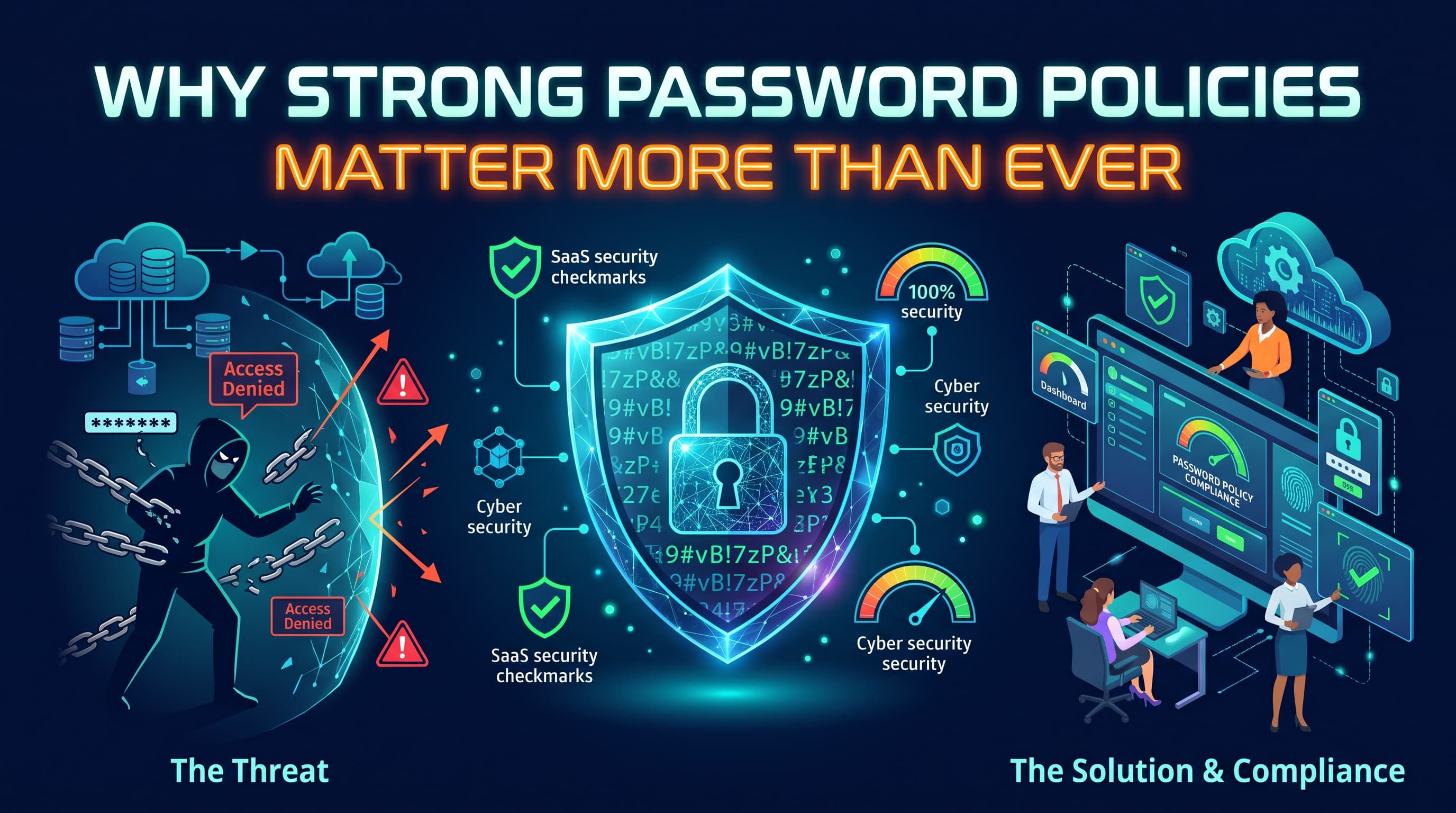
Why Strong Password Policies Matter More Than Ever
1. Cyberattacks Are Becoming More Sophisticated
Cybercriminals use automated tools to guess passwords, test stolen credentials, and exploit accounts protected by weak security practices. Attackers may also use information gathered from social media or publicly available sources to make their attempts more convincing.
Simple passwords such as “123456,” “password123,” or a company name followed by a number are particularly risky.
A strong password policy encourages employees to create long, unique passwords that are difficult to guess. This makes unauthorized access significantly harder and helps reduce the risk of common password-based attacks.
2. Protecting Sensitive Business Data
Businesses manage valuable information, including customer records, financial documents, employee details, business strategies, and confidential communications. If attackers gain access to an employee’s account, they may be able to access or expose this information.
A strong password policy helps protect sensitive data by reducing opportunities for unauthorized access. Combined with access controls, encryption, regular backups, and employee awareness training, it creates a stronger foundation for data security.
3. Preventing Credential Stuffing and Password Reuse
Many people reuse the same password across multiple websites and applications. Although this may seem convenient, it creates a serious security risk.
If a password is exposed in a data breach on one platform, attackers may try the same credentials on company email accounts, cloud storage, and other business systems. This technique is known as credential stuffing.
Businesses should require unique passwords for important accounts and encourage employees to use a trusted password manager. This allows staff to maintain secure credentials without needing to memorize every password.
4. Strengthening Remote and Cloud Security
Remote work and cloud-based applications have changed how businesses operate. Employees may access company systems from different devices, networks, and locations, making account security increasingly important.
A strong password alone cannot prevent every attack, but it provides an essential layer of protection. Businesses should combine strong, unique passwords with multi-factor authentication, secure devices, appropriate access permissions, and monitoring for suspicious activity.
These measures help organizations protect their digital environments without unnecessarily disrupting everyday workflows.
5. Reducing the Risk of Phishing Attacks
Phishing attacks trick employees into revealing login credentials through fraudulent emails, fake websites, and misleading messages. Even employees who use strong passwords can fall victim to these tactics.
Organizations should train employees to recognize suspicious links, verify login pages, and report unusual requests. Multi-factor authentication can provide an additional barrier if a password is stolen, although some phishing techniques can bypass certain MFA methods.
For stronger protection, businesses should consider phishing-resistant authentication methods, such as passkeys or security keys, where supported.
Best Practices for Creating a Strong Password Policy
Developing an effective password policy requires more than simply asking employees to use complicated passwords. The policy should be practical, easy to follow, and aligned with modern security recommendations.
1. Encourage Long, Unique Passwords
Length is an important factor in password security. Encourage employees to use long passwords or passphrases that are difficult to guess. A memorable passphrase made from several unrelated words can be a useful option.
Avoid predictable information such as birthdays, names, phone numbers, or common keyboard patterns.
For business accounts, consider a minimum length of at least 15 characters when passwords are used as the primary authentication method without MFA, while following the capabilities and guidance of your identity systems.
2. Avoid Unnecessary Password Changes
Requiring employees to change passwords every few weeks can lead to predictable variations and poor security habits. Modern security guidance generally favors changing passwords when there is evidence of compromise, a security incident, or another specific reason.
Instead of relying on frequent mandatory resets, prioritize strong passwords, unique credentials, multi-factor authentication, and compromised-password detection.
3. Implement Multi-Factor Authentication
Multi-factor authentication requires users to verify their identity using an additional factor beyond their password. Depending on the method, this might involve an authenticator app, a security key, or a passkey-based authentication process.
MFA significantly improves account security, particularly when passwords are stolen or guessed. Businesses should prioritize MFA for email, administrative accounts, financial systems, cloud platforms, and remote access services.
4. Use a Trusted Password Manager
A password manager helps employees generate, store, and retrieve strong, unique passwords securely. It reduces the temptation to reuse credentials or write them down in insecure locations.
Organizations should select a reputable password manager with strong encryption, administrative controls, secure sharing features, and appropriate business protections. Employees should also secure their password manager accounts with strong authentication.
5. Monitor and Respond to Compromised Credentials
Password security should be an ongoing process. Businesses should monitor available security alerts, investigate suspicious login activity, and respond quickly when credentials may have been exposed.
If an account is compromised, immediately secure the account, reset the affected password, revoke active sessions or tokens where appropriate, and investigate whether other systems may have been accessed.
A clear incident response procedure helps minimize potential damage and restore secure access more efficiently.
Common Password Security Mistakes Businesses Should Avoid
Even organizations with security policies can remain vulnerable when employees do not follow them consistently.
Common mistakes include:
Reusing the same password across multiple accounts.
Sharing passwords through email, chat messages, or unsecured documents.
Using short or predictable passwords.
Ignoring suspicious login notifications.
Storing passwords in plain-text files or spreadsheets.
Failing to protect administrator and privileged accounts with MFA.
Keeping former employees’ accounts active after they leave the organization.
Neglecting employee cybersecurity awareness training.
Addressing these issues through practical policies, suitable technology, and regular training can significantly improve an organization’s security posture.
How RainCyber Can Help Strengthen Your Cybersecurity
At RainCyber, we understand that effective cybersecurity involves people, processes, and technology working together. Password protection is an important starting point, but businesses also need a broader strategy to secure their digital operations.
Our IT and software solutions can help businesses improve their security practices, strengthen digital infrastructure, and adopt technology that supports safer and more efficient operations.
Whether your organization needs help reviewing its security practices, improving access controls, or developing a stronger IT strategy, taking proactive steps today can help reduce tomorrow’s risks.
Conclusion
Strong password policies matter more than ever because business accounts are valuable targets for cybercriminals. Weak, reused, or compromised passwords can expose sensitive data, disrupt operations, and damage customer trust.
By encouraging long and unique passwords, implementing multi-factor authentication, adopting password managers, training employees, and responding quickly to security incidents, businesses can build a more resilient cybersecurity environment.
Remember, cybersecurity is not a one-time task. It requires continuous attention, informed employees, and the right technology.
Ready to strengthen your business’s cybersecurity?
Visit https://raincyber.com to explore how RainCyber can support your digital security and IT needs. Protect your business today and build a safer digital future with confidence.