

Rain Cyber
SUPERADMIN
Sep 7, 2026
In today’s digital world, your website is often the first interaction customers have with your business. A website that loads slowly, contains broken links, crashes on mobile devices, or has security vulnerabilities can quickly damage your brand’s reputation and cost you valuable customers.
That’s why Web Development Testing is an essential part of building a successful website.
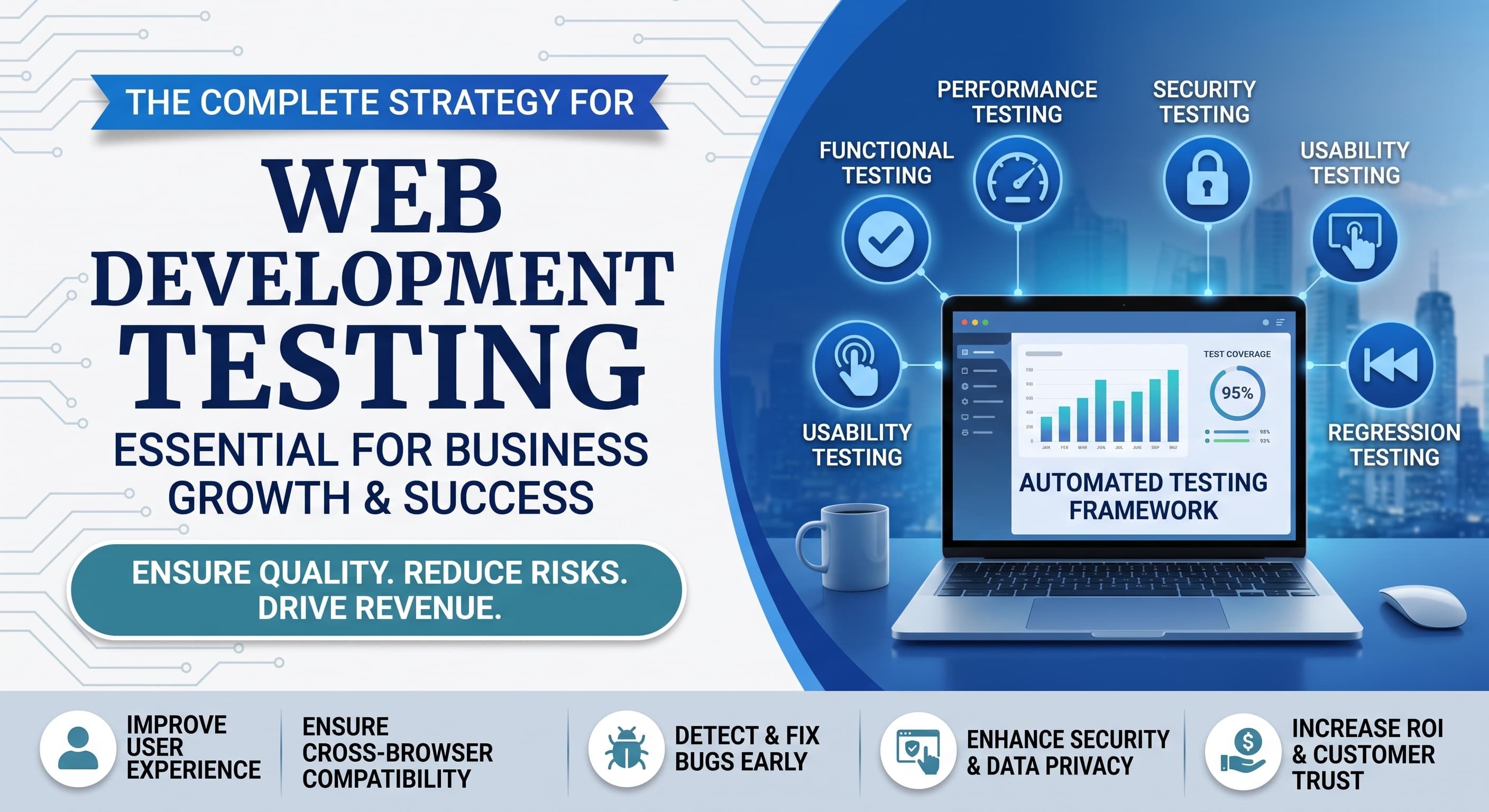
Web development testing is the process of systematically checking a website or web application to make sure it works correctly, performs efficiently, remains secure, and provides a smooth experience across different devices and browsers.
Why Is Web Development Testing Important?
A website may look perfect during development but still contain hidden issues that only appear when real users interact with it.
Effective testing helps identify problems before they reach your customers. It can help ensure:
Better website performance
Faster loading times
Improved user experience
Cross-browser compatibility
Mobile responsiveness
Stronger security
Reliable functionality
Fewer technical errors
Better search engine performance
Higher customer trust and satisfaction
Testing early and regularly can also reduce the cost and effort required to fix major problems after a website goes live.
Key Areas of Web Development Testing
1. Functional Testing
Functional testing verifies that all website features work as intended.
For example, testers may check:
Login and registration systems
Contact forms
Search functionality
Shopping carts
Checkout processes
Payment integrations
Buttons and navigation
APIs and third-party integrations
The goal is to make sure every function delivers the expected result.
2. Performance Testing
A slow website can lead to frustrated visitors and lost opportunities. Performance testing evaluates how a website behaves under different conditions.
It can include:
Page loading speed
Server response time
Database performance
Concurrent user testing
Stress testing
Load testing
Resource utilization
Performance testing helps ensure that your website remains responsive even when traffic increases.
3. Responsive & Mobile Testing
With a large percentage of users accessing websites from smartphones and tablets, responsive design is essential.
Mobile testing checks whether your website works properly across:
Smartphones
Tablets
Laptops
Desktop computers
Different screen sizes and resolutions
A properly tested responsive website provides a consistent experience regardless of the device being used.
4. Cross-Browser Testing
Different browsers can interpret website code differently. A website that works perfectly in one browser may have visual or functional issues in another.
Cross-browser testing helps verify compatibility with popular browsers such as:
Google Chrome
Mozilla Firefox
Microsoft Edge
Safari
This ensures users receive a consistent experience regardless of their preferred browser.
5. Security Testing
Website security should never be overlooked. Security testing helps identify vulnerabilities that could expose sensitive information or allow unauthorized access.
Security testing may examine:
Authentication and authorization
User access controls
Data protection
Input validation
Session management
API security
Common web vulnerabilities
A secure website protects both your business and your customers.
6. Usability Testing
A website should not only work—it should also be easy to use.
Usability testing evaluates whether visitors can easily:
Find information
Navigate between pages
Complete forms
Understand calls to action
Make purchases
Access important features
The objective is to create an intuitive and enjoyable user experience.
7. API & Integration Testing
Modern websites often depend on APIs and external services for important functionality.
API testing verifies that data is exchanged correctly between different systems and that integrations continue to work reliably.
This is particularly important for websites that use:
Payment gateways
CRM systems
ERP platforms
Shipping services
Social media integrations
Cloud services
Third-party APIs
Our Web Development Testing Approach
A structured testing process helps deliver reliable and high-quality websites.
Requirement Analysis
We first understand the website's business objectives, features, users, and technical requirements.
Test Planning
We identify the areas that need testing and create an appropriate testing strategy based on the project's requirements.
Test Execution
Our testing process covers functionality, usability, compatibility, performance, security, and other important areas.
Bug Identification & Reporting
Issues are documented clearly with relevant details so developers can quickly understand and resolve them.
Retesting & Regression Testing
After issues are fixed, we test them again and perform regression testing to make sure the fixes haven't affected existing functionality.
Final Quality Check
Before deployment, we perform a final quality assessment to ensure the website is ready for real-world users.
Why Choose Professional Web Development Testing?
Professional testing provides more than simply finding bugs. It helps ensure that your website delivers a dependable digital experience.
With the right testing strategy, businesses can:
Reduce downtime: Identify potential problems before they affect customers.
Improve customer experience: Make websites easier, faster, and more reliable to use.
Protect sensitive data: Detect security weaknesses before they become serious threats.
Increase business confidence: Launch websites with greater confidence in their quality and stability.
Support business growth: Build a technical foundation that can handle increasing users and business requirements.
Conclusion
A successful website is more than attractive design and powerful development. Quality testing is what helps turn a website into a reliable digital product.
From functionality and performance to security, responsiveness, and usability, comprehensive web development testing ensures that your website is ready to perform in the real world.
Whether you're launching a new website, developing a web application, or improving an existing platform, investing in professional testing can help you deliver a faster, safer, and more reliable experience for your users.
Build better. Test smarter. Deliver with confidence.