

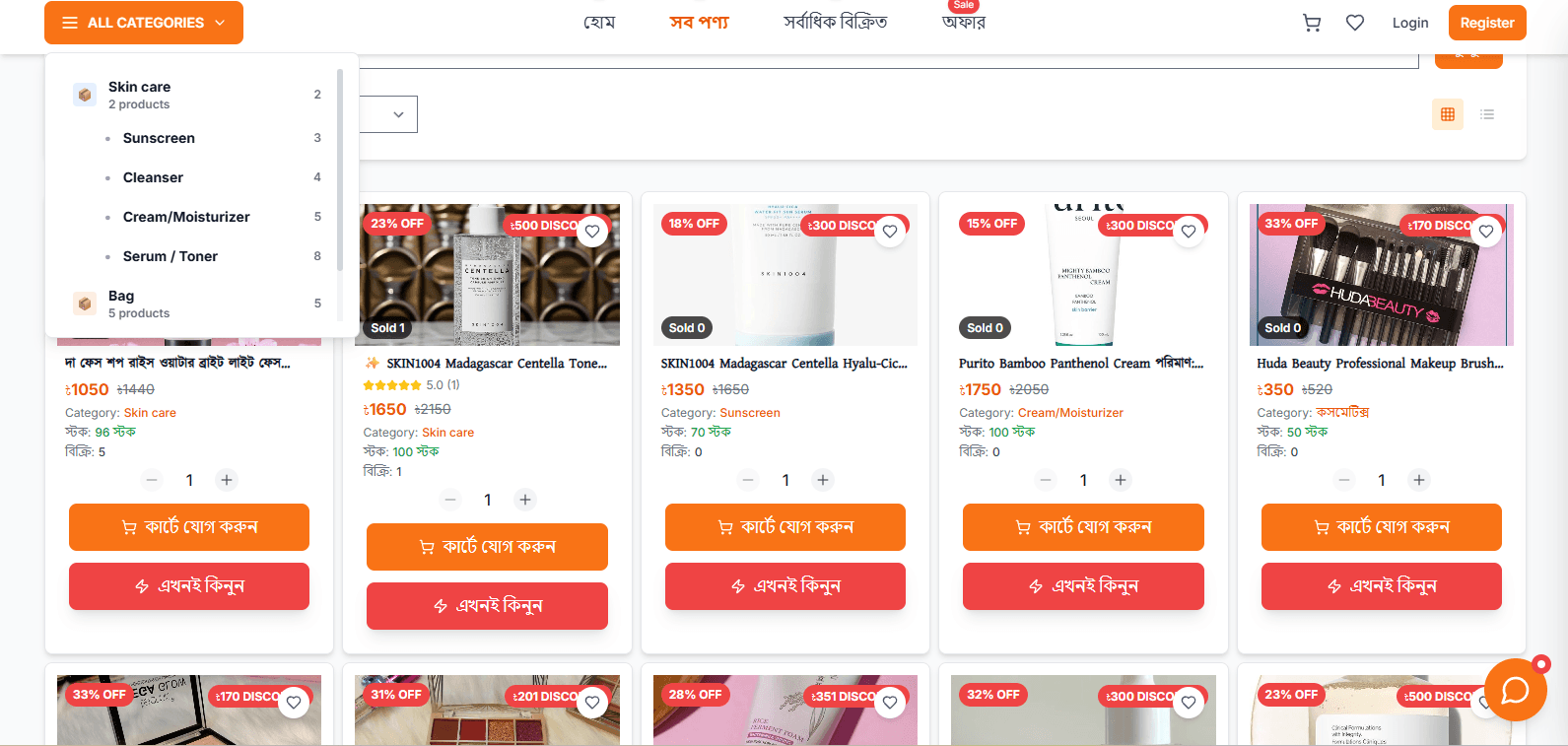
About The Project
Detailed case study and information regarding the project delivery for --.
Client
--
Case Studies: E-Commerce Platform Modernization and Scaling
Based on an analysis of the project's architecture and technology stack, here are three case studies highlighting the core challenges, solutions, and outcomes of the E-Commerce platform development.
Case Study 1: Real-Time Engagement & Performance Optimization in E-Commerce
Background
The E-Commerce platform needed to move beyond a static shopping experience to increase user engagement and retention. Furthermore, with the introduction of flash sales and dynamic inventory, the platform required real-time capabilities and a highly responsive frontend.
Challenge
Implementing real-time updates for inventory and flash sales without overloading the server.
Ensuring a smooth, app-like user interface while maintaining good SEO and fast initial load times.
Managing complex global state across a large React application.
Solution
Real-Time Architecture: Integrated
socket.io(backend) andsocket.io-client(frontend) to push real-time updates to clients for inventory changes and active flash sales.Modern State Management: Adopted
zustandfor lightweight, fast global state management in the React frontend, replacing bulkier alternatives like Redux to reduce boilerplate and improve rendering performance.Dynamic UI/UX: Utilized
framer-motionfor fluid micro-animations and transitions, enhancing the premium feel of the user interface.Automated Scheduling: Implemented
node-cronon the Node.js backend to automate the start and end of flash sales and promotional events.
Outcome
The integration of WebSockets enabled instant feedback for shoppers during high-traffic flash sales, reducing checkout conflicts. The combination of Zustand and Framer Motion resulted in a highly responsive, modern frontend that keeps users engaged.
Case Study 2: Scalable Media Management & Security
Background
As the product catalog grew, the platform faced challenges with storing, optimizing, and delivering high-quality product images efficiently. Security of user data and API endpoints was also a paramount concern.
Challenge
Handling a massive influx of user-uploaded and product images without degrading server performance.
Protecting the Express.js API against common web vulnerabilities (XSS, NoSQL injection, DDoS).
Solution
Cloud Media Infrastructure: Migrated image hosting to Cloudinary using
multer-storage-cloudinary. This offloaded storage and bandwidth from the primary servers and provided on-the-fly image optimization and transformations.Robust Security Middleware: Implemented a comprehensive security suite on the Node.js backend:
helmetto secure HTTP headers.express-rate-limitto prevent brute-force attacks and DDoS.express-mongo-sanitizeandxss-cleanto prevent database injection and cross-site scripting vulnerabilities.hppto protect against HTTP Parameter Pollution.
Secure Authentication: Utilized
bcryptjsfor secure password hashing andjsonwebtoken(JWT) for stateless, secure API authentication.
Outcome
Image delivery speeds improved drastically due to Cloudinary's CDN, leading to faster page loads. The API is now fortified against the most common OWASP top 10 vulnerabilities, ensuring customer data remains secure.
Case Study 3: Localized Payment Processing & Deployment
Background
To serve the target demographic effectively, the platform required integration with regional payment gateways. Furthermore, the deployment process needed to be streamlined for both the frontend and backend.
Challenge
Integrating a reliable local payment gateway for seamless transactions.
Managing environment variables and deployment configurations across different services (Coolify, Vercel).
Solution
Payment Gateway Integration: Integrated
sslcommerz-ltsto securely handle local payments, ensuring compliance and smooth checkout flows for regional customers.Containerization & Hosting:
Dockerized the backend API (
Dockerfile,docker-compose.yml) to ensure consistency across development and production environments.Utilized Coolify for backend deployment, managing it via custom deployment scripts (
deploy.sh).Configured the frontend to handle proxies securely (
vercel.json,nginx.conf) for seamless communication with the backend API.
Communication Systems: Implemented
nodemailerfor transactional emails (order confirmations, password resets).
Outcome
The platform successfully processes localized payments with high success rates. The containerized backend via Coolify and optimized frontend deployment allows the development team to ship updates quickly and reliably without downtime.