

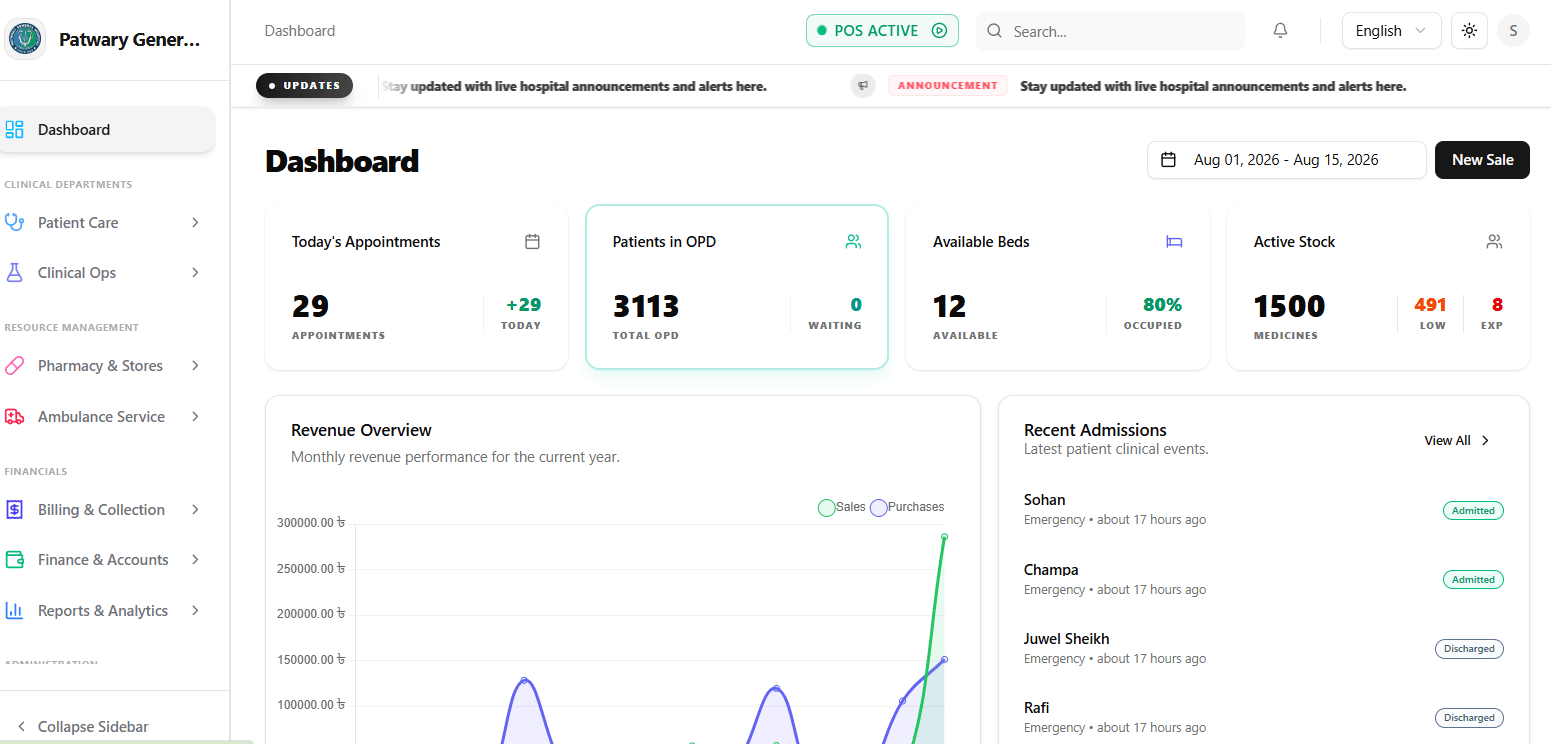
About The Project
Detailed case study and information regarding the project delivery for --.
Client
--
Case Studies: Enterprise Hospital Management System (HMS)
Based on the structure and features of the Hospital Management System Frontend, here are three tailored case studies you can use for your portfolio, presentations, or client pitches. These case studies highlight different aspects of the system's value proposition.
Case Study 1: Streamlining Patient Admissions and Bed Management
The Challenge: A mid-sized hospital was struggling with long patient wait times during the admission process. The manual paperwork and disjointed communication between the reception desk and the wards led to inefficient bed allocation, causing bottlenecks in the emergency and outpatient departments.
The Solution: We implemented the HMS Patient & Facility Modules, replacing manual data entry with a streamlined digital flow.
Digital Admissions: We developed an intuitive
admission-dialoginterface that allowed staff to capture patient demographics, medical history, and insurance details in a single, fluid process.Real-Time Bed Tracking: The facility module was integrated to provide a real-time dashboard of bed availability across different wards and ICUs.
Automated Routing: Once admitted, the system automatically notified the relevant ward nurses and assigned an initial care provider.
The Results:
70% Reduction in Admission Time: The average time to admit a patient dropped from 25 minutes to just under 8 minutes.
Improved Bed Utilization: Real-time tracking eliminated double-booking and reduced the "empty bed" turnaround time by 40%.
Enhanced Patient Experience: Patients reported significantly higher satisfaction scores due to shorter wait times and less repetitive questioning.
Case Study 2: Unifying Clinical Operations and Diagnostics
The Challenge: A diagnostic center within a hospital network faced critical delays in reporting test results to attending physicians. Doctors had to log into a separate legacy system to view lab and radiology results, leading to delayed diagnoses and frustrated patients.
The Solution: We deployed the Diagnostic, Providers, and Appointments Modules of the HMS to create a centralized clinical workspace.
Unified Provider Dashboard: Doctors were equipped with a personalized dashboard showing their daily appointments and pending tasks.
Integrated Diagnostics: Lab results and radiology reports were routed directly into the patient's electronic health record (EHR) within the system.
Instant Alerts: Critical abnormal lab results triggered immediate UI notifications for the assigned providers.
The Results:
Faster Clinical Decisions: Time-to-treatment for acute cases improved by 35% because doctors no longer had to hunt for test results.
Increased Appointment Throughput: With diagnostic data readily available during consultations, average appointment durations became more efficient, allowing clinics to see 15% more patients daily.
Zero Lost Reports: The centralized system eliminated instances of lost or misplaced physical lab reports.
Case Study 3: Optimizing Revenue Cycle and Pharmacy Billing
The Challenge: A multi-specialty clinic was losing revenue due to missed billing charges and inefficient inventory management in their internal pharmacy. The lack of integration between the clinical side and the billing department meant that many administered medications and minor procedures were never invoiced.
The Solution: The implementation of the Finance, Billing, and Pharmacy Modules of the HMS bridged the gap between clinical care and revenue management.
Automated Charge Capture: Medications prescribed and administered via the system automatically generated line items in the patient's billing ledger.
Pharmacy Inventory Integration: Dispensing medication immediately updated stock levels and triggered reorder alerts when inventory ran low.
Comprehensive Financial Dashboards: Administrators gained access to real-time reports on daily revenue, outstanding invoices, and department-wise profitability.
The Results:
22% Increase in Captured Revenue: Automated billing ensured that all procedures and medications were accurately invoiced.
Reduced Stockouts: Pharmacy inventory accuracy reached 99%, and emergency stockouts of critical medicines were virtually eliminated.
Faster Discharge Process: Integrated billing allowed for immediate generation of final invoices, speeding up the patient discharge process by 50%.